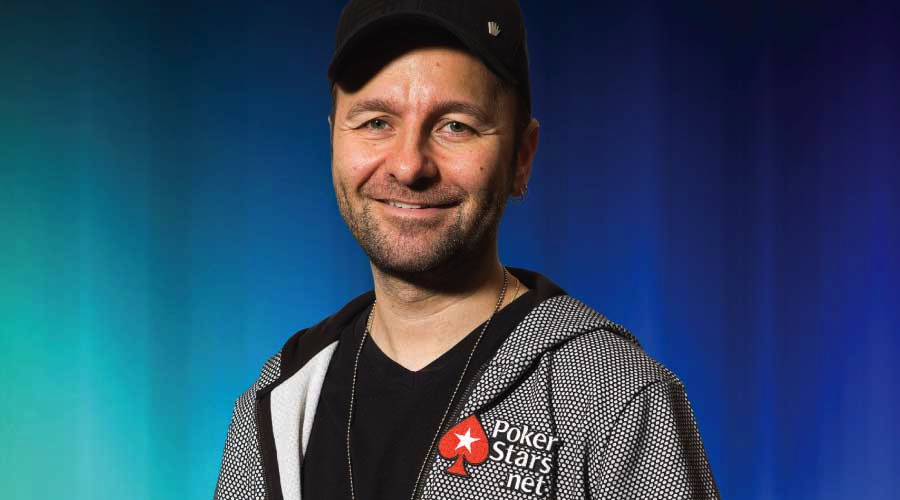
Marc Convey talks to Player of the Year Daniel Negreanu about his incredible year…
In December 2012, Daniel Negreanu was ending what had been a relatively dry year. Apart from a few hot days in April where he made two final tables in high roller events at the EPT Grand Final, it was poor compared to the standards he’d set himself throughout his career. There were no bracelet wins, no titles whatsoever. There was noise in the industry about how Negreanu was only a one-man PR machine for PokerStars, where personality and image are just as important as talent when it comes to getting sponsored.
Many of his best results were coming in small field high roller events and questions were beginning to be asked if Negreanu had gone the way of so many other ‘old school’ pros that had failed to keep up with the natural evolution of the game. Well, as 2013 draws to a close the situation is very different. After a phenomenal year that includes two WSOP bracelet wins, a WSOP Player of the Year title and over $3.2 million in winnings, it’s fair to say that Kid Poker is better than ever before. PokerPlayer caught up with the man of the moment…
PokerPlayer: Talk about where you were heading at the start of 2013.
Daniel Negreanu: I was doing this programme called Choice Center and that changed the way I planned my goals for the year. In the past I said I was going to do this or that but I’m probably not going to achieve them, as I would set the goals too high. The biggest difference for this year was that I set the goals thinking I’m going to achieve all of them.
Has the course helped you clear your mind and enabled you to focus more?
I’m not sure I’ve changed the way I focus; I still spend a lot of time away from the table doing my own thing and not paying attention. I just have greater confidence when I’m in a hand and know I can outmanoeuvre, and outtalk, my opponent. I’m comfortable in my own skin now and don’t second-guess myself.
I wasn’t thinking: what would other people do in this situation? I was making plays that I thought were right. Others were talking about how this or that was incorrect and –EV but I was determined to do things my way.
You won the WSOP APAC main event. How were you feeling going into it and was it a major confidence booster that you made the final table of the mixed event just a few days earlier?
I felt really good about the eight-game that Phil Ivey won. I made one small mistake in a pot-limit Omaha hand on the final table but it didn’t get me down. I finished fourth and had a lot of confidence heading into the main event.
The extended levels gave me more time to implement my strategy and I didn’t have to hit the panic button so soon. Because I’d had a lot of success in these main events outside of Las Vegas [Negreanu finished second in the 2009 WSOPE main event in London] I felt like I was supposed to get there, and I did.
I declared I was going to have fun. When I have fun, generally good things happen and they did in that tournament! With two tables left I said to myself that I was going to win it. I was so in the zone.
How did winning in Australia change what you thought was possible for the year?
When I won that tournament, along with the other final table, I realised I was in a monstrous position to win WSOP Player of the Year (POY). Then I went on to final table the EPT Grand Final and the WPT one. I was feeling really good about my game heading to the World Series.
Were you proud to be a part of one of the best final tables ever at the EPT Grand Final main event?
I really liked that final table. I knew they were all such good players, and this isn’t to take anything away from them at all, but I felt so comfortable playing against them. I felt I was going to have to get unlucky to get knocked out as I felt like I knew what everybody was doing. I did end up getting unlucky against Johnny Lodden when I had Queens against his Nines and he hit a Nine, which happens.
Would winning an EPT be the icing on your career?
I want to win tournaments that put an extra sexy gold feather in your hat. The EPT Grand Final is special; it’s the pinnacle of the EPT. I want to win that one.
Were you happy with how you played at the Vegas WSOP?
The World Series was okay. I didn’t win a bracelet or make as many deep runs as I would’ve liked but overall I put myself in situations to win. The 2-7 event was one of the best tournaments I played. I felt like I outplayed Eli Elezra heads-up but I couldn’t beat him.
What was disappointing was that I didn’t know the point structure for the POY and the difference between first and second was huge, it was like 50 points. If I’d won I would’ve been ahead of Matthew Ashton going into Europe but instead I was 50 points behind which was a massive difference.
You’ve had all this success doing it your way with little three-betting and a lot of flop play. Talk to us about that.
Poker started to change and there was more three and four-betting and other things. Everyone else was telling me I wasn’t good and you start to question who is right. I lost confidence in myself away from the poker table as I had a broken heart and this transferred itself onto the poker table. Through the [Choice Center] course I found that confidence in myself again, took ownership of it and that helped in every aspect of my life. Poker just seemed easy and I had faith in the fact that I played differently than everybody else and that’s the reason I win.
Winning the WSOPE bracelet or the Player of the Year title. Which is bigger for you?
The POY is big for me and always a major goal of mine. I’m always going to win bracelets and I’m grateful for that. I have six now and that puts me back in the race for the most of all-time. But to win POY twice, nobody has ever done that before, and it really cements me as belonging at the top of poker, which I’m not sure I always believed.
I’m always going to be a poker player, that’s something that’s always going to be a part of my life. I’ve done so much in poker but I’ve learned true happiness comes from a balanced life.
At the WSOPE final table you started with 8BBs. Did you really believe you could win?
I honestly felt I was going to win it the whole time. I played the main event and I sat with 10-15 big blinds for most of the tournament and I was fighting not to get knocked out. I ended up finishing 25th but I thought: eight big blinds? How are they going to knock me out again? It wasn’t going to happen.
Once they doubled me up to about 20, I was so close to the average in my mind. When I think of average, I think of half the average as being good enough for me. I was back in the mix and once I doubled up again, I saw their faces change. I sensed it and saw my opportunity to win the thing. When I got to a million chips, I was like, this is no joke, I’m really going to win this thing.
How was the 2013 POY race different to the 2004 race?
With a good stack in the old days I could’ve coasted to eighth no problem, but not with these 16 players! If you looked at the murderer’s row list of who got knocked out, it includes Phil Ivey, Jason Mercier and a whole bunch of superstars.
The amount of mistakes made in the late stages of tournaments these days are so minimal that you have to capitalise on every little thing you can and create a strategy that’s going to work for you. That final table was like any other, you know the players are gong to be precise because they’re all professionals. These were top professionals too, high rollers, not just regular tour players. They are all super-good.
2004 was such a different time for me. Back then I developed a strategy that was so advanced for the time that it was easy. Back then people were raising four times the blind, I was making it 2.5 times and being laughed at but I kept winning. People started noticing and taking note of it.
Which POY means more to you? Personally, this one means a lot more to me than the first one. It was a little more difficult to win. I was in Australia, I grinded Vegas and then I went to Paris and won it in the very last tournament of the year. I love drama! What’s better than bottom of the ninth with bases loaded and you have to win?
Matthew Ashton is a really great guy and we had great banter about it. Obviously, when it came down to it I just want to win and beat everybody. He’s such a gentleman though and there was never any animosity; I felt very loving towards him. He’s a great kid and a great player. I’m proud of the fact he came out here and tried to win it, he didn’t try to mail in the win. I’m proud of him for seeing how valuable it is to win the POY and know that’s something you have for the rest of your life.
PokerPlayer magazine is out monthly on iTunes, available here.